
The structure of the degree
The scope of the Bachelor of Police Services degree is 180 credits. Contents of the degree:
- Core and professional studies (100 credits)
- Training period facilitating professional competences (55 credits)
- Thesis (15 credits)
- Elective studies (10 credits)
The studies progress in modules and are completed in a defined order. Each module is worth 15 ECTS credits and consists of 3–5 courses.
In a modular curriculum, subjects are not taught as separate entities but as interrelated themes connected to real-life, work-oriented cases.
Module-based curriculum for the Bachelor of Police Services degree
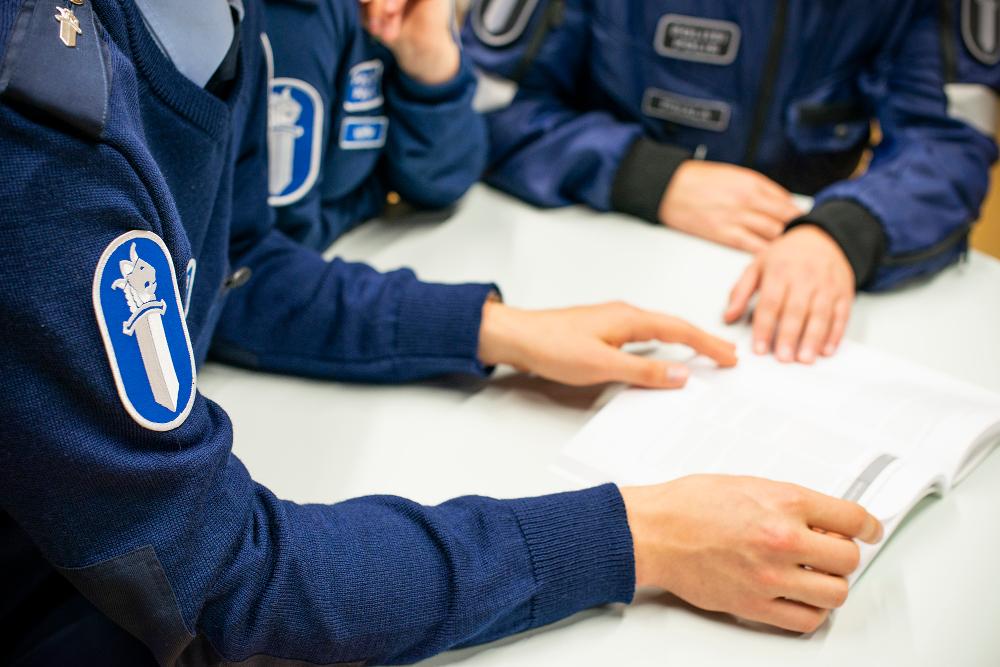
Practical training
After studying for about 1.5 years, you will start your practical training in a police department. The practical training period lasts for about one academic year, and during this period, you are appointed to a Constable Intern position. You will work in a police patrol under the guidance of a senior police officer, who will also be your partner. You will investigate crimes under the guidance of an experienced criminal investigator. In addition, you will become familiar with the licensing services of the police and participate in customer service.

Thesis
As part of the Bachelor of Police Services degree, you will write a thesis that might be an operational development project arising from the needs of working life or another applied study. Students will also complete a maturity test related to the thesis.
Previous theses are available for browsing in the Theseus service.
Bachelor of Police Services’ theses in the Theseus service (in Finnish and in Swedish)
Elective studies
Elective studies help you to deepen and broaden your knowledge. You can choose courses offered by the Police University College, or you can apply for courses in some other university-level study program. Elective studies can cover scientific research methods, communications, foreign languages and collaboration with stakeholders and authorities, for example.
See information about cross-institutional studies in other universities